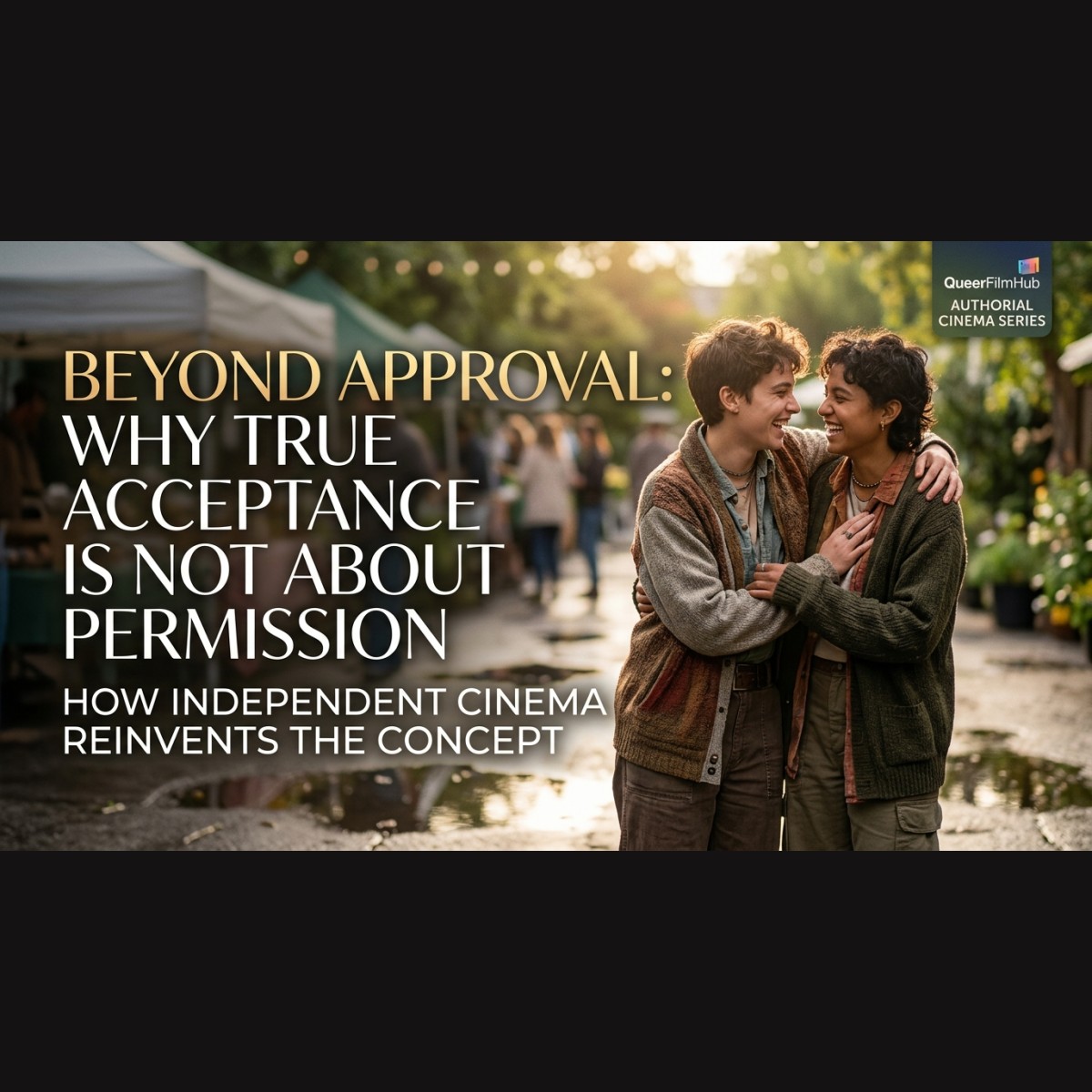
Mainstream media has sanitized the concept of "acceptance." In conventional Hollywood narratives, acceptance is framed as a prize granted by a benevolent majority to a queer character who has proven themselves sufficiently harmless, agreeable, and polite. To earn this conditional approval, protagonists are expected to perform respectability, smooth over their rough edges, and assimilate into existing social structures.
Auteur and independent cinema utterly rejects this transaction. True acceptance is not an act of tolerance granted by society; it is the radical recognition of one's absolute right to exist without condition, explanation, or the need to be liked.
1. Rejecting the "Perfect Victim" TropeTo win the sympathy of mainstream audiences, commercial films often rely on the archetype of the flawless, tragic victim. Independent directors challenge this patronizing dynamic by giving their characters room to be messy, deeply flawed, and unapologetically human.
Bad Education (La mala educación, dir. Pedro Almodóvar, 2004): Almodóvar refuses to offer easy moral resolution or sanitized innocence. His characters are driven by desire, revenge, art, and survival—demanding acceptance not as pristine symbols of virtue, but as complex, morally grey human beings.
The Duke of Burgundy (dir. Peter Strickland, 2014): Strickland normalizes unconventional dynamics by presenting them without judgment or external moralizing. Acceptance within the film is negotiated entirely between the characters themselves, far away from societal approval.
2. Radical Self-Acceptance Over External ValidationWhen external systems refuse to adapt, modern queer cinema shifts the focus inward. The ultimate narrative arc is no longer about convincing a hostile family or society to change their minds, but about arriving at an unshakeable sense of self-sovereignty.
Portrait of a Lady on Fire (Portrait de la jeune fille en feu, dir. Céline Sciamma, 2019): Marianne and Héloïse do not spend their time begging for societal validation. Within their temporary, autonomous space, acceptance is total, reciprocal, and immortalized through art, transcending the rigid constraints of 18th-century patriarchy.
Lof mér að falla (Let Me Fall, dir. Baldvin Z, 2018): Baldvin Z’s unflinching realism shows that coming to terms with one's identity and trauma requires confronting the rawest truths of existence, rather than relying on comforting, artificial happy endings.
3. Acceptance as a Form of ResistanceTo accept oneself fully in a culture that continuously demands assimilation is a political act. Independent filmmakers understand that true representation isn't about being invited to the table—it's about building a space where the table is no longer necessary.
Industry
Beyond Approval: Why True Acceptance Is Not About Permission
Mainstream media has sanitized the concept of "acceptance." In conventional Hollywood narratives, acceptance is framed as a prize granted by a benevolent majority to a queer character who has proven themselves sufficiently harmless, agreeable, and polite. To earn this conditional approval, protagonists are expected to perform respectability, smooth over their rough edges, and assimilate into existing social structures.