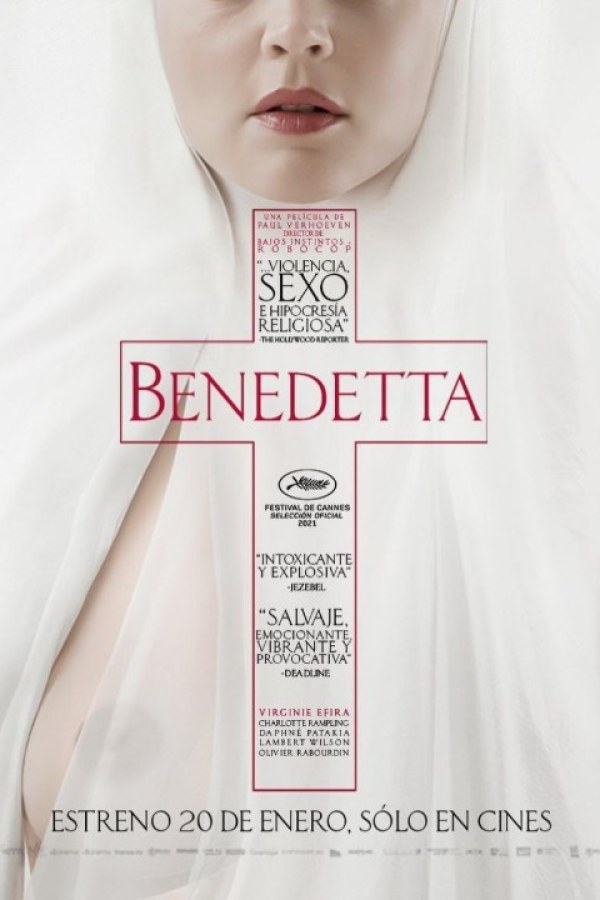
🎬 Benedetta
Set in 17th-century Renaissance Italy against the terrifying backdrop of the Bubonic Plague, Benedetta tells the true story of Sister Benedetta Carlini (Virginie Efira). As a child, Benedetta is placed in the Theatine Convent in Pescia, where her intense devotion to Jesus Christ manifests in vivid, violent erotic-religious visions.
When a desperate young refugee, Bartolomea (Daphné Patakia), seeks sanctuary in the convent, Benedetta takes her under her wing. Shortly after, Benedetta manifests genuine stigmata wound marks on her hands and feet, propelling her to the rank of Abbess over the skeptical former Abbess Felicita (Charlotte Rampling). Behind locked cloister doors, Benedetta and Bartolomea engage in a passionate, forbidden sexual affair. As political rivalry inside the church deepens, the Papal Nuncio (Lambert Wilson) arrives to investigate whether Benedetta is a genuine saint, a master manipulator, or possessed by the devil.
💡 Did you know?
Based on Historical Vatican Records: The screenplay was directly adapted from historian Judith C. Brown's 1986 groundbreaking book Immodest Acts: The Life of a Lesbian Nun in Renaissance Italy, which uncovered one of the earliest documented lesbian affairs in European history through trial transcripts.
Cannes Palme d'Or Competition: The film made its world premiere in official competition for the prestigious Palme d'Or at the 2021 Cannes Film Festival, generating intense debate and critical acclaim.
Verhoeven's Provocative Signature: True to director Paul Verhoeven’s iconic filmography (Basic Instinct, Elle, Showgirls), the film deftly blends serious religious metaphysics with outrageous camp, subversive satire, and erotic provocation.
Charlotte Rampling & Virginie Efira: Virginie Efira spent months studying 17th-century religious ecstasy, while Charlotte Rampling delivered a masterclass in quiet political cynicism as the pragmatic Abbess.
⭐ Film Evaluation & Ratings 📈
⭐ Global Critical Consensus: 7.7 / 10 (85% on Rotten Tomatoes)
Lauded by film critics worldwide as a sharp, unapologetic, and thrillingly subversive masterpiece that explores power, faith, manipulation, and female agency within patriarchal systems.
🎨 Visual & Production Craft: 8.8 / 10
Jeanne Lapoirie’s luminous, painterly cinematography draws inspiration from Baroque oil paintings, creating a striking contrast between sterile stone convents and visceral blood-and-flesh visions.


Comments
No comments yet. Be the first!
Leave a comment