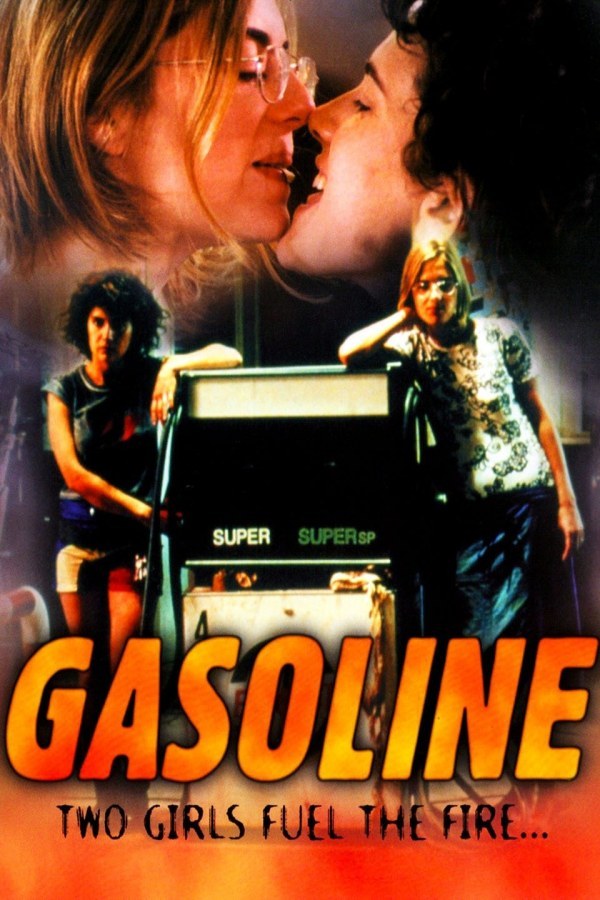
Some debuts do more than break genre barriers—they become enduring touchstones for an entire generation. In 2001, Italian director Monica Stambrini introduced the world to Gasoline (Benzina / Love and Run)—an uncompromising, atmospheric, and high-octane psychological neo-noir that quickly earned international cult status.
Stambrini crafted a raw story about two young women in their early twenties whose relationship is pushed to the absolute edge following a tragic accident. Rather than surrendering to the moralizing tropes and harmful clichés typical of late-90s and early-2000s cinema, she embraced genuine authenticity, youthful naivety, and a narrative momentum reminiscent of Fargo.
In this exclusive conversation for our platform, Monica Stambrini reflects on the making of her defining film, the urgent need to break taboos in Italian queer cinema, and how Gasoline continues to resonate with audiences more than two decades after its premiere.
Question 1:
Back then, did you anticipate that the story of "Love and Run" (Gasoline) would achieve such an enduring international cult status?
Monica Stambrini:
Oh, absolutely not! Of course, I don't think anybody ever anticipates a film becoming a cult classic—though I'm deeply flattered to hear that it is considered one.
However, I definitely knew one thing when I was offered to direct this film: I knew that we all needed—that the world needed—a real lesbian movie. In particular, I wanted to avoid the usual clichés. I felt the audience didn't need another story where lesbians were reduced to murder plots—even though there is a homicide in Gasoline—or portrayed as terrifying, borderline, lawless figures with no rules or roof over their heads, which was true for most of the lesbian films I had seen up until that point.
My intention was to try and make the characters more... how should I say... naive, just as they truly were at that age, being only 21 years old. I wanted the narrative to feel somewhat like Fargo in a way—a situation that simply happened, and they just had to find a way out of it.
All I knew regarding its cult potential back then was that there was an immense need for lesbian cinema. There were far too few lesbian movies being made—not just in Italy, where Gasoline was perhaps one of the very first, but internationally as well.
(https://www.udrop.com/file/OTMz/Marek_1.m4a)
Question 2:
How did you build the chemistry and bond between Maya Sansa and Regina Orioli on set?
Monica Stambrini:
First of all, something I forgot to mention earlier is that the film is based on an Italian novel of the same title, Benzina (Gasoline).
When it came to casting, I essentially approached it by casting a couple rather than just two individual actresses. It was crucial to me that the two of them had a genuine bond and truly liked each other. The first person I cast was Maya Sansa (Stella)—an incredible, highly skilled actress who was already very talented and had appeared in major Italian films.
With Maya in place, Regina Orioli fell into her role naturally. They were so different from one another, which I thought was extremely important, and they liked each other right away. That chemistry was vital because, in the end, no matter what the script or the director does, it all comes down to the chemistry between the actors.
It was fascinating to see how they naturally embodied their characters both on and off camera. Maya is a very cultivated actress—she studied in London and worked incredibly hard on her craft. Regina, on the other hand, had already starred in films and was quite known, but she got into acting almost by chance and never went to drama school. This dynamic perfectly mirrored their characters: Stella (Maya) is someone who deliberately chose her life, her work, and knew her identity as a lesbian, whereas Lenni (Regina) simply fell for her, still searching for who she was.
Another interesting detail is that Regina is very short-sighted. She chose to do the entire film without wearing contact lenses or glasses because it helped her feel lost—a physical state that matched Lenni’s need for someone to guide her, just as Stella does in the film.
(https://www.udrop.com/file/OTMA/Marek_2.m4a)
Question 3:
You’ve never played it safe in your career. How did your approach to capturing female vulnerability and creative power evolve from "Gasoline" to your documentary on Isabella Ducrot ("Hold Tight, Miss")?
Monica Stambrini:
Yes, I never played it safe—never! I don't think I like playing it safe. I enjoy being daring, and that’s what keeps me going. Plus, since I’m often the producer of my own work, I have the freedom to do that, with all the good and bad that comes with it.
When I decided to propose making a portrait of Isabella Ducrot, I was in a creative crisis, as I often am when starting a new project. I had first met her ten years prior through Le ragazze del porno—a project created by women directors exploring adult cinema in Italy. Back then, we were searching for independent funding because we couldn't secure it through traditional channels. We ran a crowdfunding campaign and set up a pop-up gallery for artists with erotic works. That’s how I met Isabella. She had these beautiful erotic pieces kept hidden in her drawers and enthusiastically let us showcase them. We ended up selling all of them! I was astonished that major galleries hadn't recognized how brilliant her work was.
Ten years later, I attended a major exhibition of hers in Rome, where those same erotic works were finally recognized and sold for much higher prices. Seeing that she had finally made it inspired me. I thought, What an incredible story—getting recognized and finding major success in your nineties! But beyond that, Isabella is just a deeply special person, so it was also my excuse to get close to her. I ended up following her with my camera for two years and honestly didn't want to stop—I had so much fun and could have filmed her and her world forever. That's how the documentary Hold Tight, Miss (Tenga duro, signorina) was born.
Looking at how my approach has evolved, the biggest shift has been my transition from fiction to documentaries. It moved from imagining or idealizing a character on screen to forming a real connection and falling in love with a real, existing person. That shift—from fiction to documentary—has been the defining change in my work. Though who knows? Maybe I’ll switch back to fiction soon—I’d love that too.
(https://www.udrop.com/file/OTMC/3.m4a)
Question 4:
What is the most important piece of advice you would give to young independent filmmakers who want to tell transgressive stories without compromising their artistic vision?
Monica Stambrini:
Just do it! Don't wait for... you know, validation or approval.
Of course, when making a film, we are not on our own—we need other people to believe in what we want to do, and that’s actually one of the things that makes filmmaking so beautiful. But my absolute piece of advice is: go for it. Just do it. Don't let a lack of money stop you. Find a way to make it happen.
I think obstacles can often be very creative. They force you—they help you—to find a path. If everything is too easy or readily available, you end up with too many choices and you don't know where to go. Narrowing things down because of constraints can actually help you focus. Sometimes the best things happen when they were the hardest to make. So yes, my advice is simply: just do it.
We need independent voices now more than ever. Nowadays, we all watch the same movies on the same platforms, and we're already so bored by that uniformity. We truly need more independent filmmakers and original works.
(https://www.udrop.com/file/OTMD/4.m4a)
Editor’s Note:
We would like to extend our deepest gratitude to Monica Stambrini for taking the time to share her thoughts, memories, and invaluable wisdom with us. Her uncompromising vision and dedication to authentic storytelling continue to inspire independent cinema lovers around the world.
Have you seen "Gasoline" or "Hold Tight, Miss"? What are your thoughts on Monica’s perspective on independent filmmaking? Share your comments below!