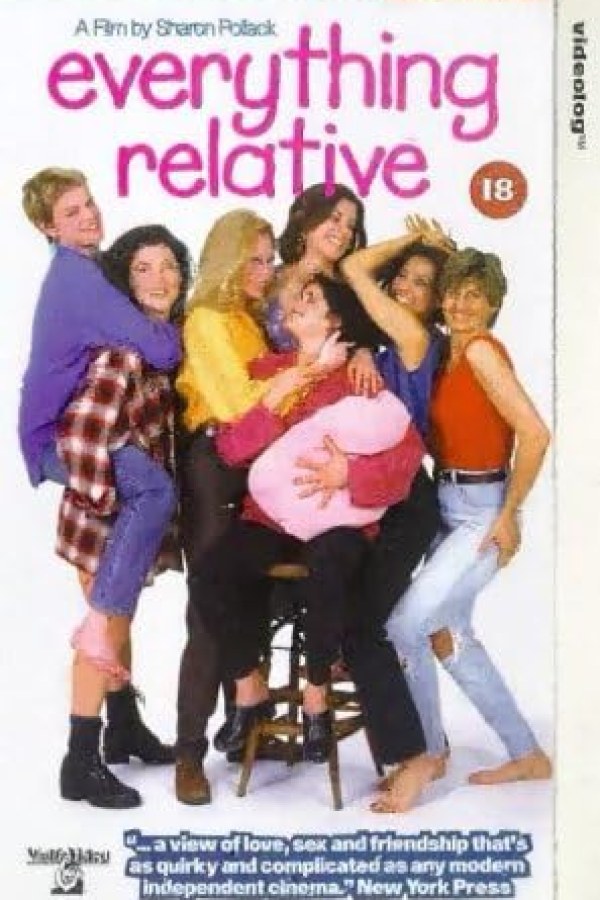
THE QUEER TIME CAPSULE OF CHOSEN FAMILY: Why Everything Relative is a Essential 90s Relic
In the mid-1990s, independent queer cinema was undergoing a massive, radical evolution. While the New Queer Cinema movement was defined by the transgressive, avant-garde works of directors like Gregg Araki and Todd Haynes, writer-director Sharon Pollack took a completely different, grounded approach with her 1996 comedy-drama Everything Relative. Often dubbed the "lesbian Big Chill" or a spiritual successor to Return of the Secaucus Seven, this low-budget, American Spectrum Sundance selection swaps out the glossy existential dread of its mainstream predecessors for a deeply affectionate, unvarnished look at aging, activism, and the resilient bonds of queer sisterhood.
It is a warm, occasionally clunky, but undeniably vital artifact of 90s lesbian culture that captures a very specific generation of women figuring out what it means to grow up without growing apart.
The Plot: A Bris, A Cabin, and Decades of Baggage
The narrative engine kicks off with a milestone celebration: Katie (Stacy Nelkin) and Victoria (Monica Bell) have just welcomed a newborn son, an event commemorated by a delightfully surreal bris featuring a memorable cameo by Harvey Fierstein as the mohel. The ceremony serves as the perfect catalyst to reunite five of their former college classmates from their 1970s radical street-theater days in Northampton, Massachusetts. The group—comprising six lesbians and one heterosexual friend—retreats to a country lake house for a weekend of nostalgia, softball games, acoustic sing-alongs, and the inevitable confrontation of deeply buried emotional scar tissue.
The weekend quickly maps out a fascinating web of interpersonal tension:
The Domestic Rift: Victoria, a high-powered corporate lawyer, insists on remaining closeted at work to protect her career, deeply wounding the fiercely open Katie and threatening the foundation of their new family.
The Exes' Ghost: Josie (Ellen McLaughlin), a recovering alcoholic still nursing a broken heart, is forced to face Maria (Olivia Negron), the woman who left her years prior to marry a man in a desperate bid for a traditional family, only to later come out, divorce him, and lose custody of her kids.
The Generational Clash: Luce (Dreya Weber), a hardened stuntwoman trapped in the memory of a college girlfriend who died tragically, brings along her new partner, Candy (Malindi Fickle). Candy is in her early twenties, politically conservative, and treats the group's historic leftist battle scars with a flippant, champagne-swilling detachment.
The Straight Ally: Sarah (Carol Schneider), the lone heterosexual woman working at Planned Parenthood, navigates her own private heartbreak as she quietly struggles with severe infertility amidst a house full of maternal transitions.
Aesthetics and Tone: Relaxed Rhythms Over Formulaic Drama
What makes Everything Relative stand out—and what originally polarized mainstream critics like Stephen Holden—is its deliberate narrative wandering. If you are looking for a tightly plotted thriller or a film where explosive, cinematic catalysts drive the action, you won't find it here. Pollack is far more interested in the texture of everyday queer life.
The production leans into a soft, independent aesthetic:
Naturalistic Ensemble Chemistry: The film excels in its quiet, communal moments. The scenes of the women grocery shopping, arguing over politics in the kitchen, or lounging by the lake have a remarkably loose, spontaneous, and unscripted energy. The actresses perform with a lived-in comfort that makes you entirely believe their decades-long history.
The Checklist Drama: At times, the film’s script feels a bit like a programmatic laundry list of mid-90s socio-political talking points—addressing alcoholism, workplace closetedness, child custody biases, reproductive rights, and generational rifts all within a tight 110 minutes.
A Nostalgic Soundtrack: Complete with acoustic guitars, vulnerable late-night conversations under low-contrast blue lighting, and honest-to-god "coming out" folk songs, the film wears its heart unapologetically on its sleeve, leaning heavily into a sweet, earnest sincerity.
The Verdict: A Rare, Healing Snapshot
Everything Relative is undeniably a product of its time. Viewed today, some of the dialogue can feel overly earnest, and the micro-budget technical limitations occasionally show in the sound design and lighting. Yet, it remains an incredibly significant piece of queer cinema history. In an era where lesbian characters were almost universally punished, killed off, or hyper-sexualized for the male gaze in mainstream media, Pollack crafted a rare sanctuary. It gave these women a platform to be messy, cynical, deeply flawed, and fiercely loving—ultimately granting them a rare, deeply earned happy ending.
Rating: 🌟🌟🌟🌗 (3.5 / 5)