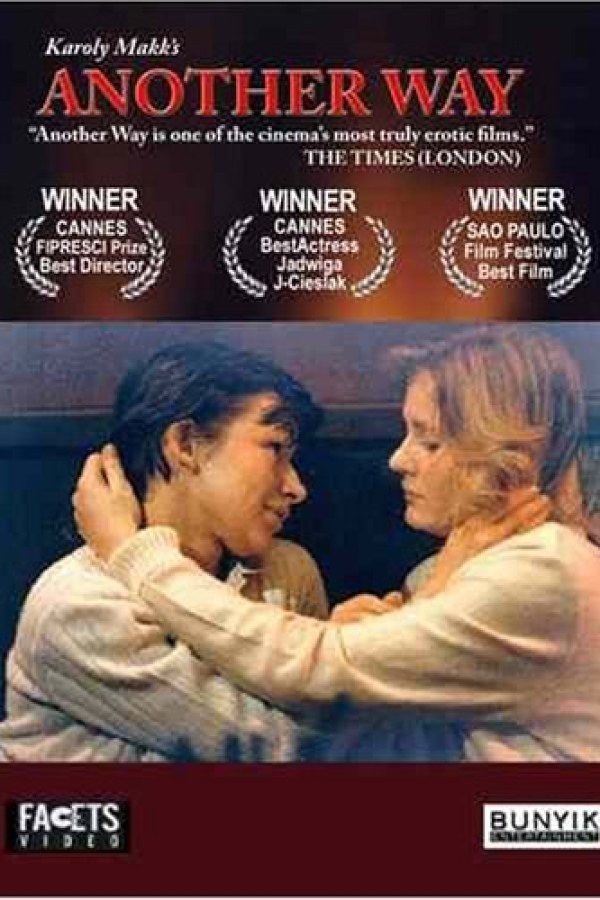
Overview: A Groundbreaking Masterpiece of Political & Personal Resistance
Based on Erzsébet Galgóczi’s semi-autobiographical novella Törvényen belül (Within the Law), Károly Makk’s Another Way (1982) stands as a landmark entry in Eastern European cinema. Recognized as the first Hungarian feature film to openly and compassionately depict a lesbian relationship, the film tackles a double taboo of Cold War Eastern Europe: the criminalization of homosexuality and the political hangover of the crushed 1956 Hungarian Uprising.\
Premiering in competition at the 1982 Cannes Film Festival, the film earned Jadwiga Jankowska-Cieślak the Best Actress Award, alongside the prestigious FIPRESCI Prize, solidifying its place as a bravura fusion of political critique and tragic romance
The Narrative Setup
Set in 1958 Budapest, two years after the Soviet suppression of the Hungarian Revolution, the story follows Éva Szalánczky (Jadwiga Jankowska-Cieślak), an uncompromising, fiercely independent journalist who joins the staff of a state-sanctioned weekly paper called The Truth.
Éva quickly forms a complex bond with her desk mate, Lívia Horváth (Grażyna Szapołowska), an elegant woman trapped in a stifling marriage to Dönci (Péter Andorai), an officer in the communist army.
The Entwining of State and Personal Freedom: Makk brilliant equates totalitarian censorship with homophobic repression. The state's demand to alter news reports mirrors society's demand for women to suppress their true desires.
Noir Visual Atmosphere: Working with cinematographer Tamás Andor, Makk crafts a moody, shadow-drenched post-revolution Budapest, where shadows on park benches and sterile office corridors reflect constant surveillance and moral isolation.
Exceptional Polish Leads: Polish actresses Jankowska-Cieślak and Szapołowska deliver career-defining, deeply tender performances that transcend sensationalism, elevating the film into an intimate human tragedy.
The Verdict
Another Way is a poetic, courageous, and deeply haunting masterpiece. Károly Makk created far more than a historical landmark; he delivered a universal story about the cost of refusing to live a lie
Final Rating: 🌟🌟🌟🌟🌟 (5/5) – A searing, unforgettable classic of European cinema that bridges queer romance and political resistance with profound emotional weight.