In contemporary international cinema, Sophie Hyde stands as one of the most empathetic, emotionally articulate storytellers of her generation. A master of intimate human dynamics, the Australian filmmaker has redefined the boundaries of modern relationship dramas, queer narratives, and coming-of-age stories. Hyde’s cinema operates as a deeply compassionate observation space—one where conversation, physical proximity, domestic interiors, and subtle shifts in power are not mere narrative devices, but living, breathing catalysts for personal liberation. Rather than relying on melodramatic sensationalism, her camera leans into raw, honest vulnerability, mapping the precise moments when societal expectations give way to authentic self-discovery.
📽️ Signature Aesthetic & Cinematic Philosophy
Spatial and Emotional Intimacy: Hyde excels at creating closed-room or character-focused environments—from the hotel suite of Good Luck to You, Leo Grande to the intimate canal homes of Jimpa—turning restricted settings into expansive canvases for emotional exposure.
Empathetic Neutrality: Her directorial lens never judges or moralizes. She approaches taboo topics, non-conforming gender identities, and intergenerational intimacy with deep curiosity and dignity.
Authentic Character Dynamics: Rooted in her background with the Closer Productions collective, Hyde constructs naturalistic, performer-led scenes where subtle eye contact and body language carry as much weight as written dialogue.
"My interest is always in how people relate to one another—how we negotiate our desires, our fears, and the boundaries we set between who we are and who we present to the world."
— Sophie Hyde
🎬 MOVIE REVIEW: Jimpa
Generational Clashes and Tender Queer Kinship: Sophie Hyde’s Intimate Family Portrait
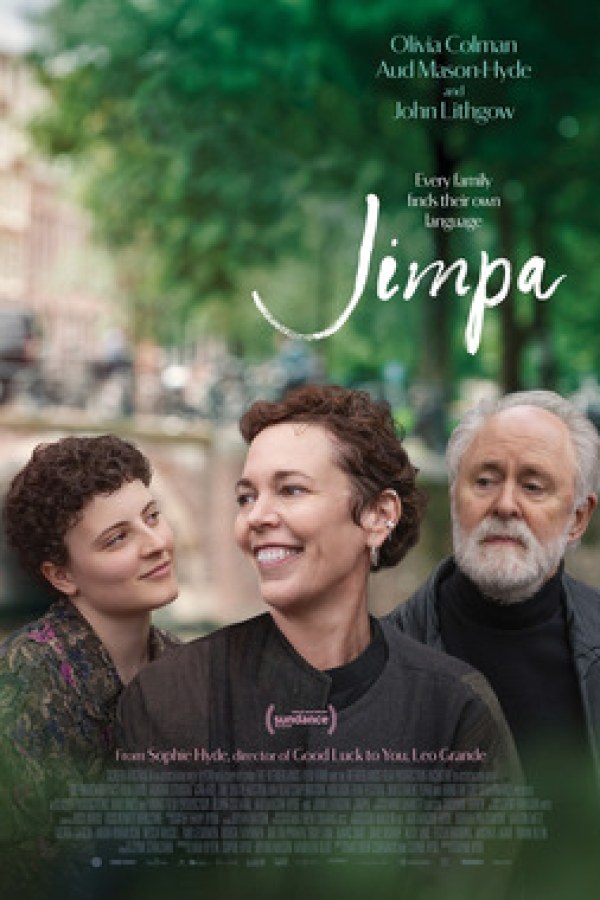
Directed by Sophie Hyde, Jimpa is a warm, deeply human exploration of family dynamics, identity, and the complicated ways we love across generations. Anchored by powerhouse performances from Olivia Colman and John Lithgow, the film offers a nuanced look at how personal values clash and realign when three distinct generations gather under one roof.
The Plot: An Amsterdam Interlude
The narrative follows Hannah (Olivia Colman), an Australian film director, and her non-binary teenage child, Frances (Aud Mason-Hyde), as they travel to Amsterdam. Their destination is the home of Hannah’s bohemian father, Jim—affectionately known as "Jimpa" (John Lithgow).
Jim is a gay man who has lived a life defined by sexual liberation, artistic freedom, and fierce independence. However, as Frances expresses a desire to stay in Amsterdam to finish high school under Jimpa's care, Hannah finds herself caught between her devotion to her child's self-discovery and a deep-seated mistrust of her father's unconventional, sometimes boundary-pushing lifestyle.
Powerhouse Performances Across Generations
The true heart of Jimpa lies in its magnetic ensemble cast:
John Lithgow as Jimpa: Lithgow gives a towering yet delicate performance as a patriarch whose past activism and open-mindedness clash with the delicate sensibilities of today's younger queer generation. He is charismatic, flawed, and immensely sympathetic.
Olivia Colman as Hannah: Colman shines as a mother attempting to balance her progressive ideals with protective maternal anxiety. Her internal struggle provides the emotional spine of the story.
Aud Mason-Hyde as Frances: In a breakout performance, Mason-Hyde brings quiet authenticity and sharp self-assurance to Frances, grounding the intergenerational dialogue with real grace.
Key Theme: The film masterfully unpacks the friction between the older generation's fight for liberation and the modern youth's focus on boundaries, safety, and identity terminology.
Visuals and Atmosphere
Hyde captures Amsterdam not as a tourist postcard, but as a lived-in, intimate space filled with cozy canalside apartments and golden-hued sunlight. The cinematography feels grounded and organic, allowing the emotional beats and quiet character moments room to breathe.
🍿 Verdict & Legacy
Jimpa is a tender, witty, and emotionally resonant drama that refrains from taking easy sides. It recognizes that love within a family often requires unlearning old habits and accepting that progress looks different to every generation.
By placing female perspective, gender fluidity, and intergenerational empathy at the heart of her filmography, Sophie Hyde continues to prove that true cinematic power lies not in spectacle, but in the courage to be fully human.
Rating: 🌟🌟🌟🌟☆ (4/5)