Sonic Abjection, Urban Naturalism, and the Aesthetics of Riot Grrrl Defiance
1. Introduction: The Uncompromising Voice of Hell's Kitchen
Alex Sichel stands as a vital, tragically brief, yet historically indelible monument within late-1990s American independent cinema. Emerging from the underground art scenes of New York City and deeply embedded in the intersection of radical feminist theory and punk counter-culture, Sichel weaponized her lens to capture the raw, unpolished, and socio-economically heavy realities of young female and queer survival. Her cinema completely rejects the sanitized, market-friendly coming-of-age formulas of corporate Hollywood. Instead, she positions the camera directly within the volatile friction points of urban alienation, domestic decay, and subcultural rebellion, mapping out the precise moment when a marginalized body claims its own voice.
2. Formal Signature: The Visceral Frame and Auditory Sabotage
Sichel’s directorial methodology is defined by an intense, tactile naturalism that treats cinema not as an object of passive bourgeois consumption, but as a site of sensory and emotional weight.
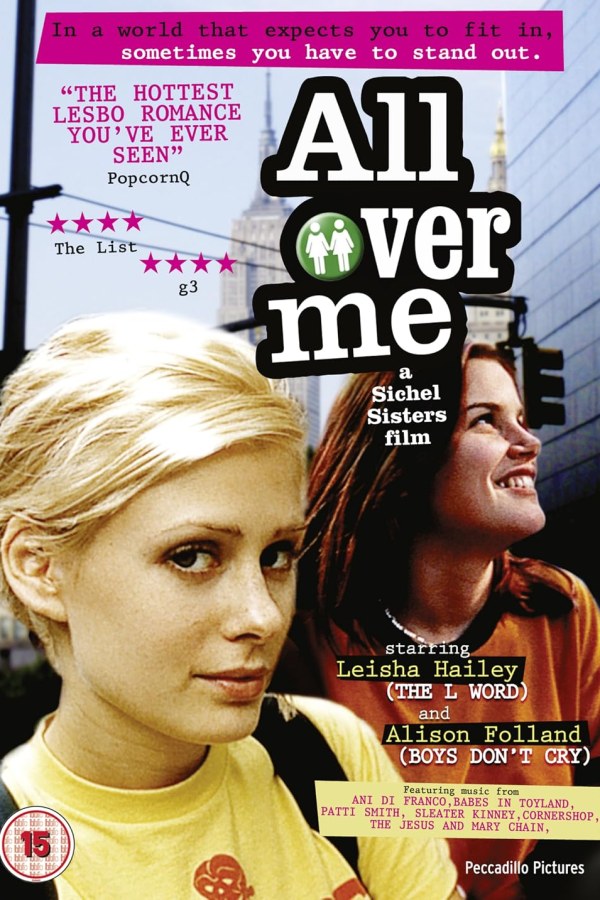
The Neon Nocturnal Palette: In her monumental masterpiece All Over Me (1997), Sichel—working in strict creative tandem with her sister, screenwriter Sylvia Sichel—deploys a highly calculated visual language. Her frames are saturated with deep, bruised purples, suffocating industrial blues, and bleeding neon pinks, visually externalizing the internal turmoil and creative combustion of her protagonists.
The Sonic Architecture: Sichel is a master of treating sound as an active formal component. The music of iconic Riot Grrrl acts (Sleater-Kinney, Babes in Toyland) functions not as passive background ambience, but as a physical, distorted counter-force that systematically rips through the patriarchal and homophobic noise of the urban environment, validating the characters' inner rage.
3. Deconstructing the Matrix of Institutional Indifference
What positions Alex Sichel as an essential auteur for the QueerFilmHub historical archive is her fierce, absolute refusal to compromise with commercial expectations. She documents the world of queer youth without an ounce of sentimental fluff or patronizing moralism. In her work, the adult world and societal institutions function like an administrative prison—either actively hostile or completely checked out. Sichel frames the creation of subcultural, non-heteronormative spaces not as a mere phase, but as a sovereign sanctuary necessary for psychological survival.
4. Conclusion: The Living Archive of Punk Cinema
Alex Sichel remains an indispensable blueprint for creative bravery and aesthetic consistency. Her brief filmography stands as a vital, distorted, and loud historical record of a time when independent film dared to be messy, uncompressed, and deeply inconvenient to the status quo. Her legacy serves as a permanent reminder to contemporary filmmakers: true cinematic power is not achieved by fitting into the algorithms of the world, but by having the courage to blast your own music through the static.